Party
Balloons, tableware, décor, hats and favours — the year-round stock your shelves need.
Party supplies for wholesale and private label
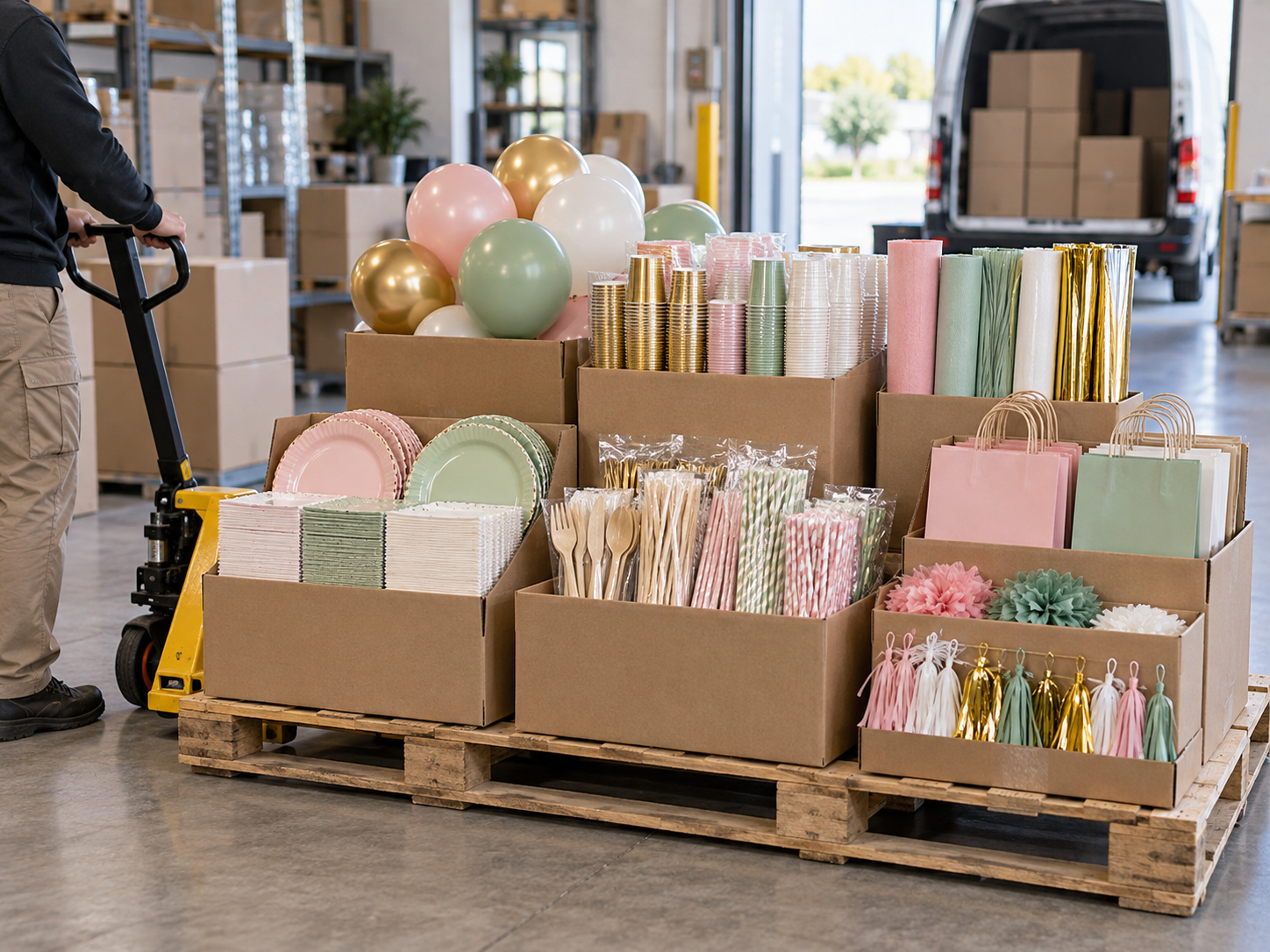
This page is the index for the party supplies range: the consumable and decorative lines that sell in every month of the year rather than against one shelf date. The range is organised into five family groups, balloons, tableware, decoration, headwear and accessories, and favours, and each has its own category page that goes deeper on materials, sizing, pack formats and ordering rules. The buyers this range is built for are importers and wholesale distributors, party and novelty wholesalers, discount and variety retail, supermarket and chain buying teams, event and wedding suppliers and online sellers who need a repeatable supply of the same items season after season. Party supplies behave differently from holiday goods. There is no single on-sale date to plan around, so the commercial question is not when to ship but which lines reorder on their own and which lines need a design decision to keep selling. The range is quoted on FOB, CIF or DDP terms, stock and private-label programmes are both supported, and mixed loading across all five families against one set of shipping documents is normal. Send us the pack formats you already sell and the occasions you sell into, and we will propose the family mix that fits them.

How the five family groups fit into one party set
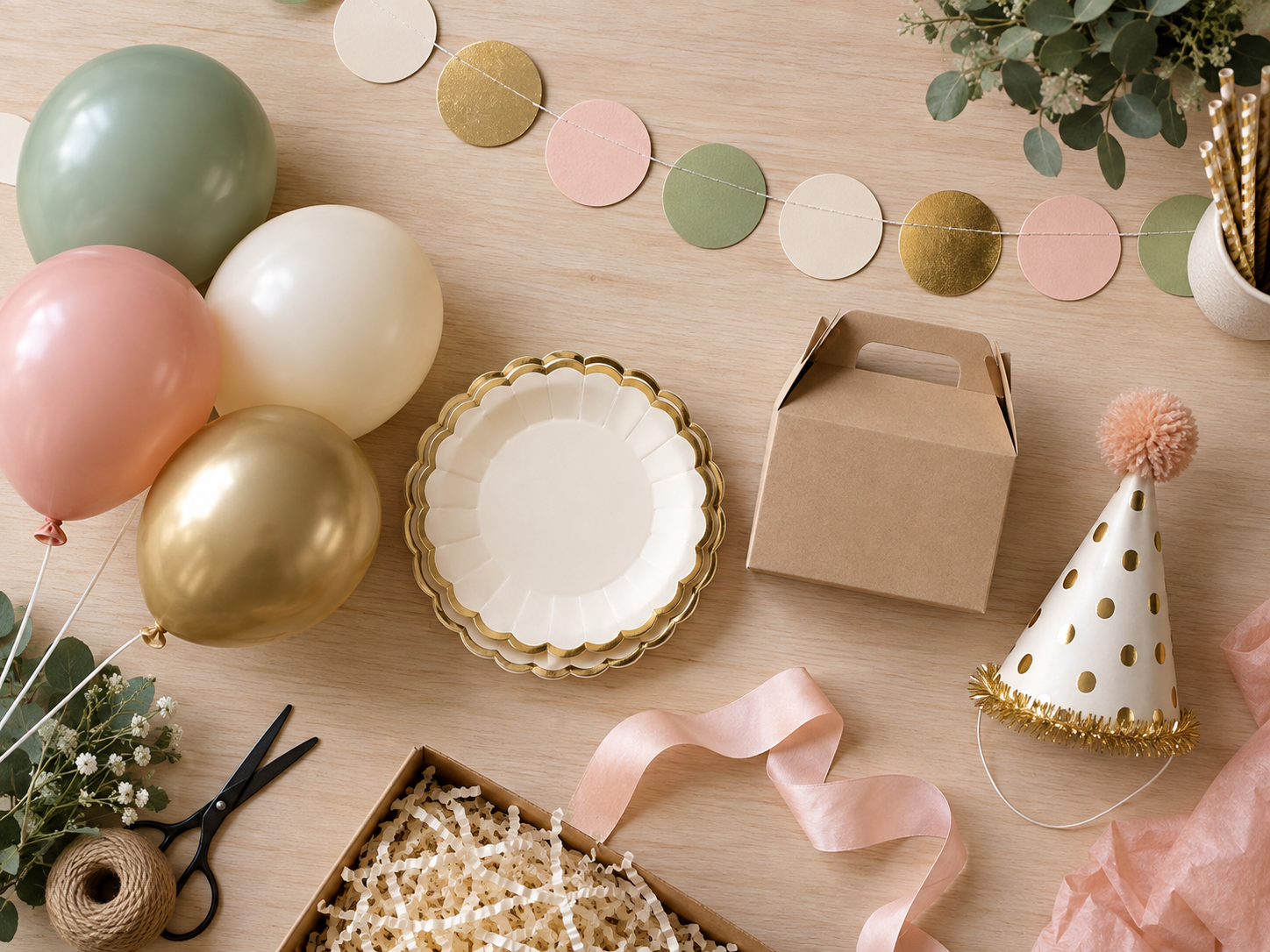
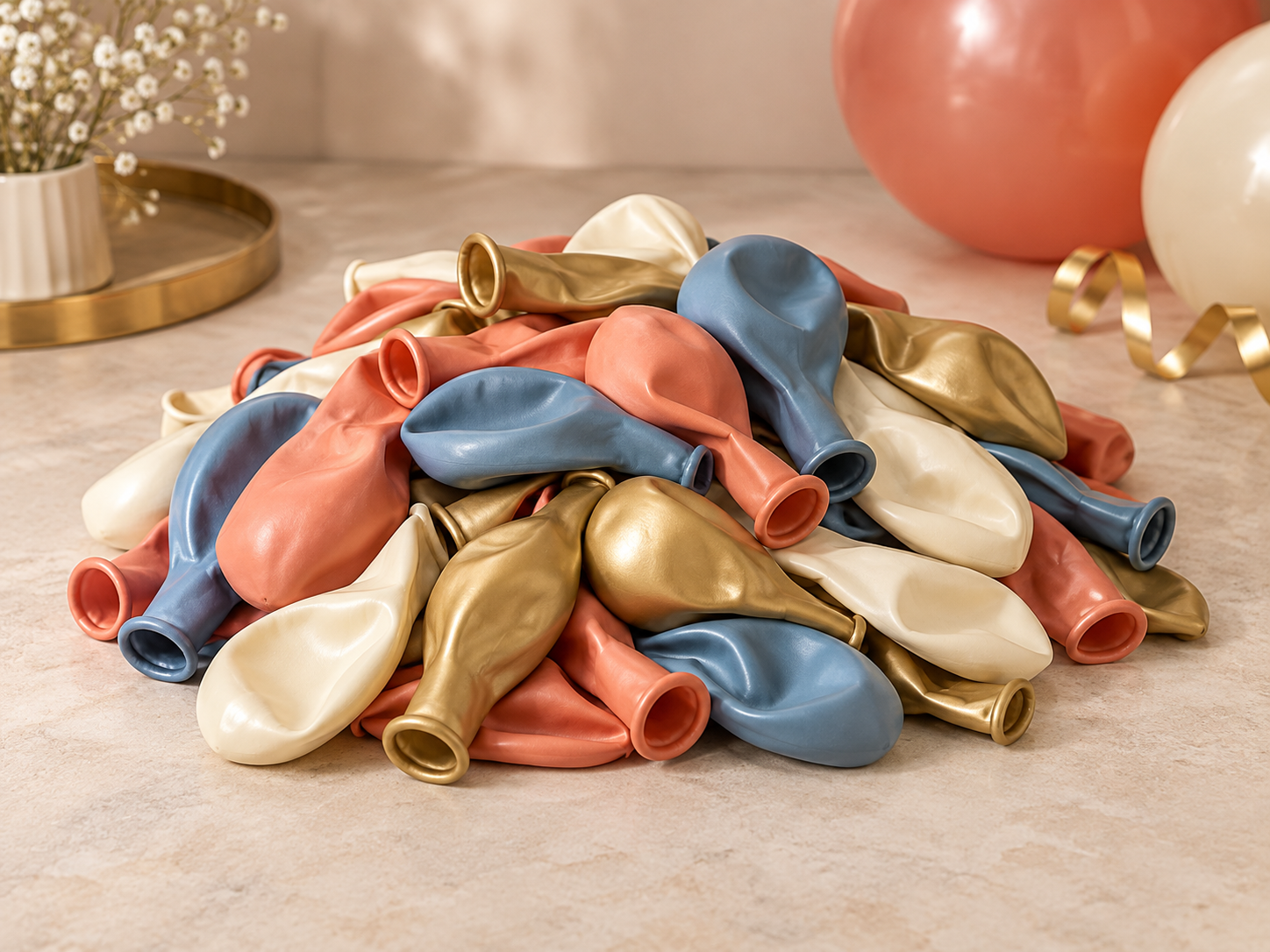
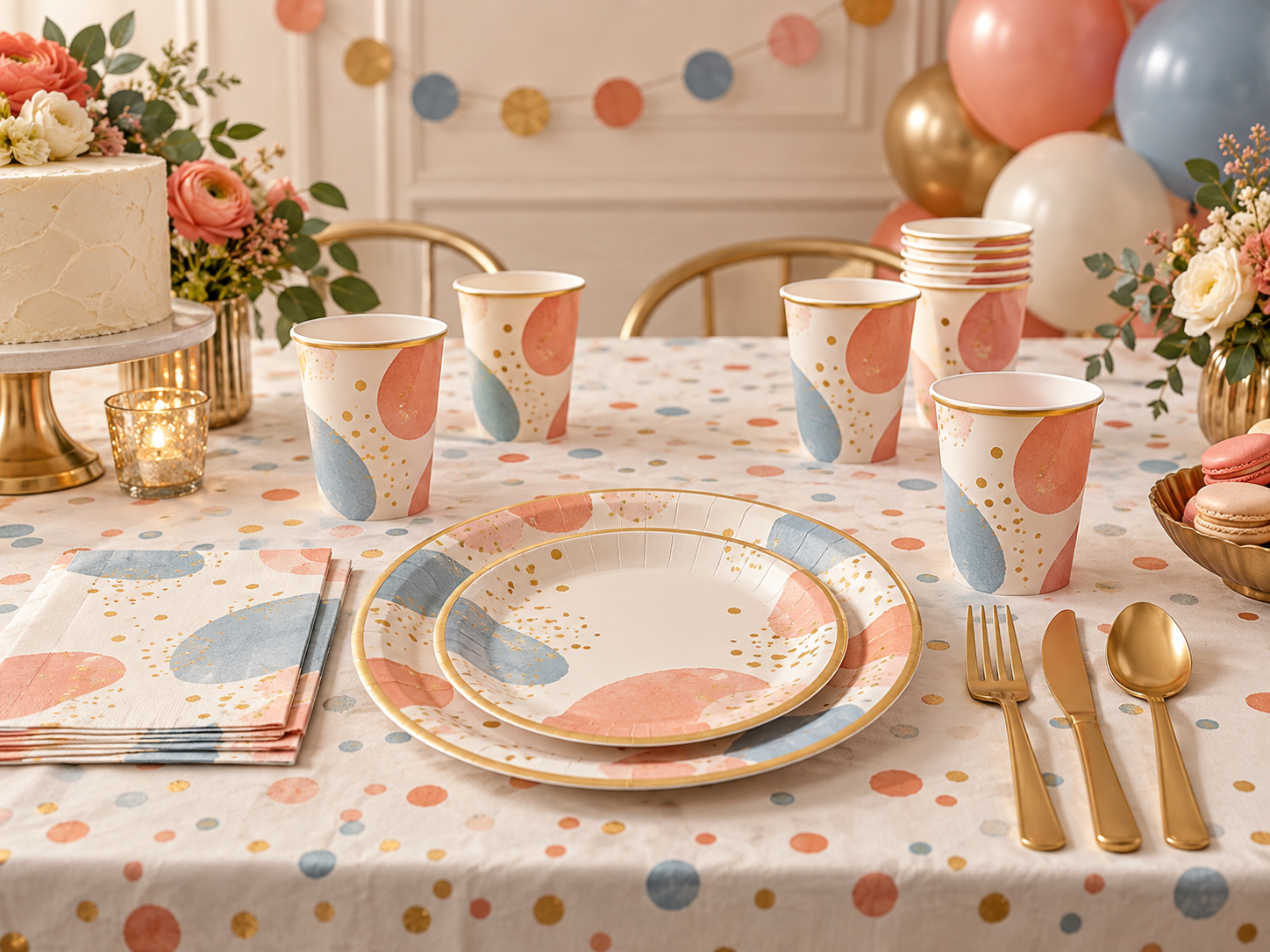
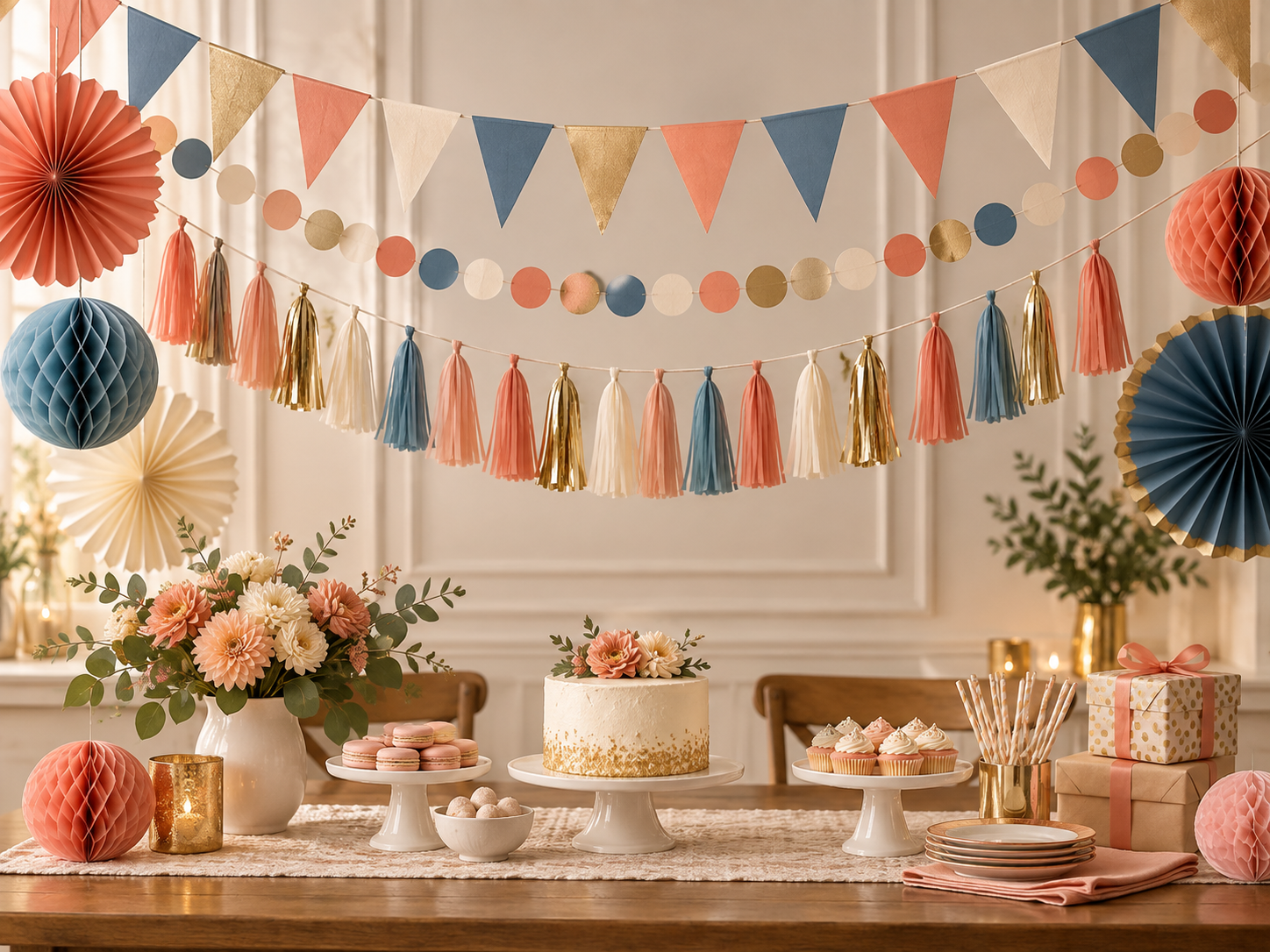
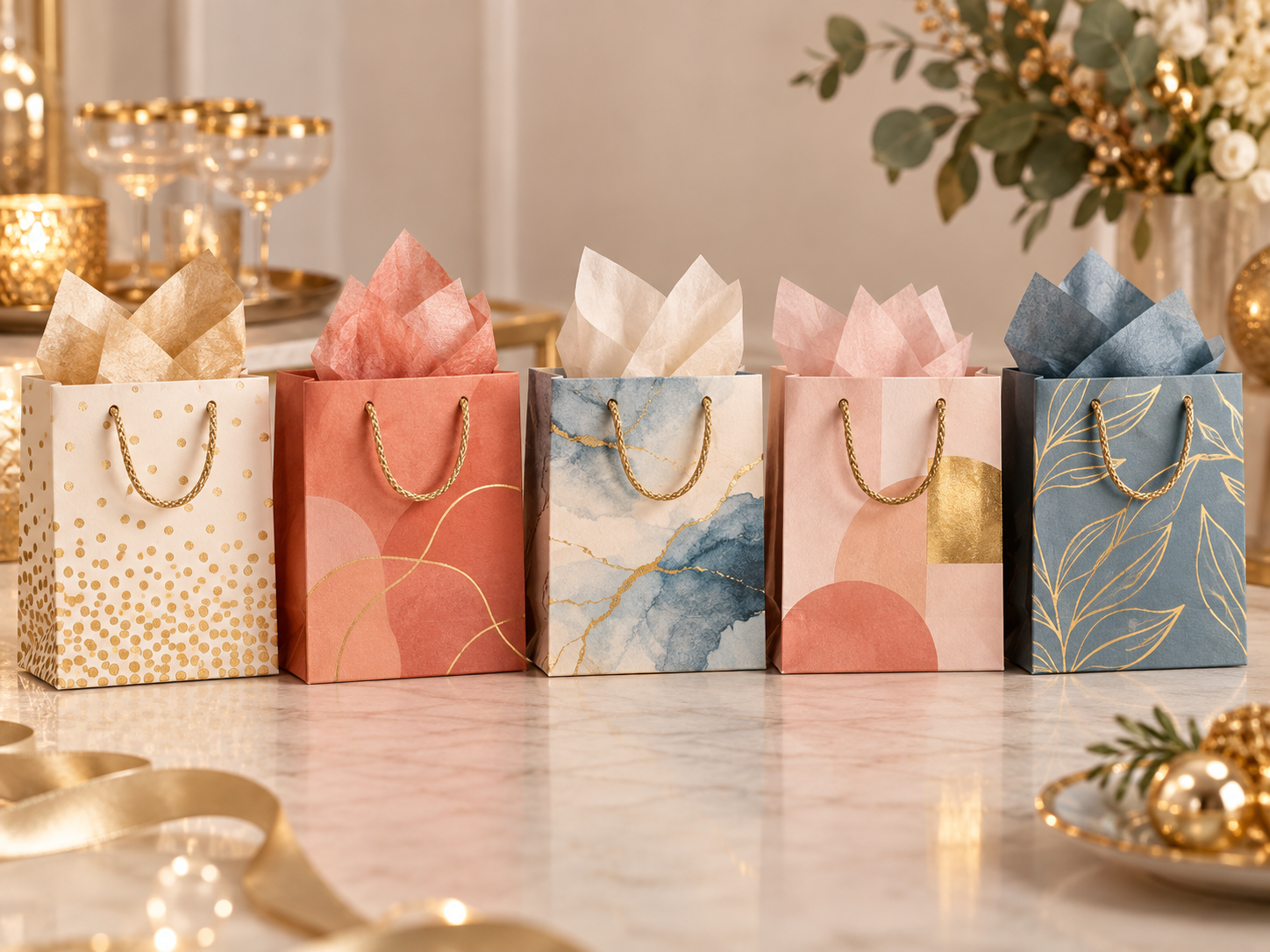
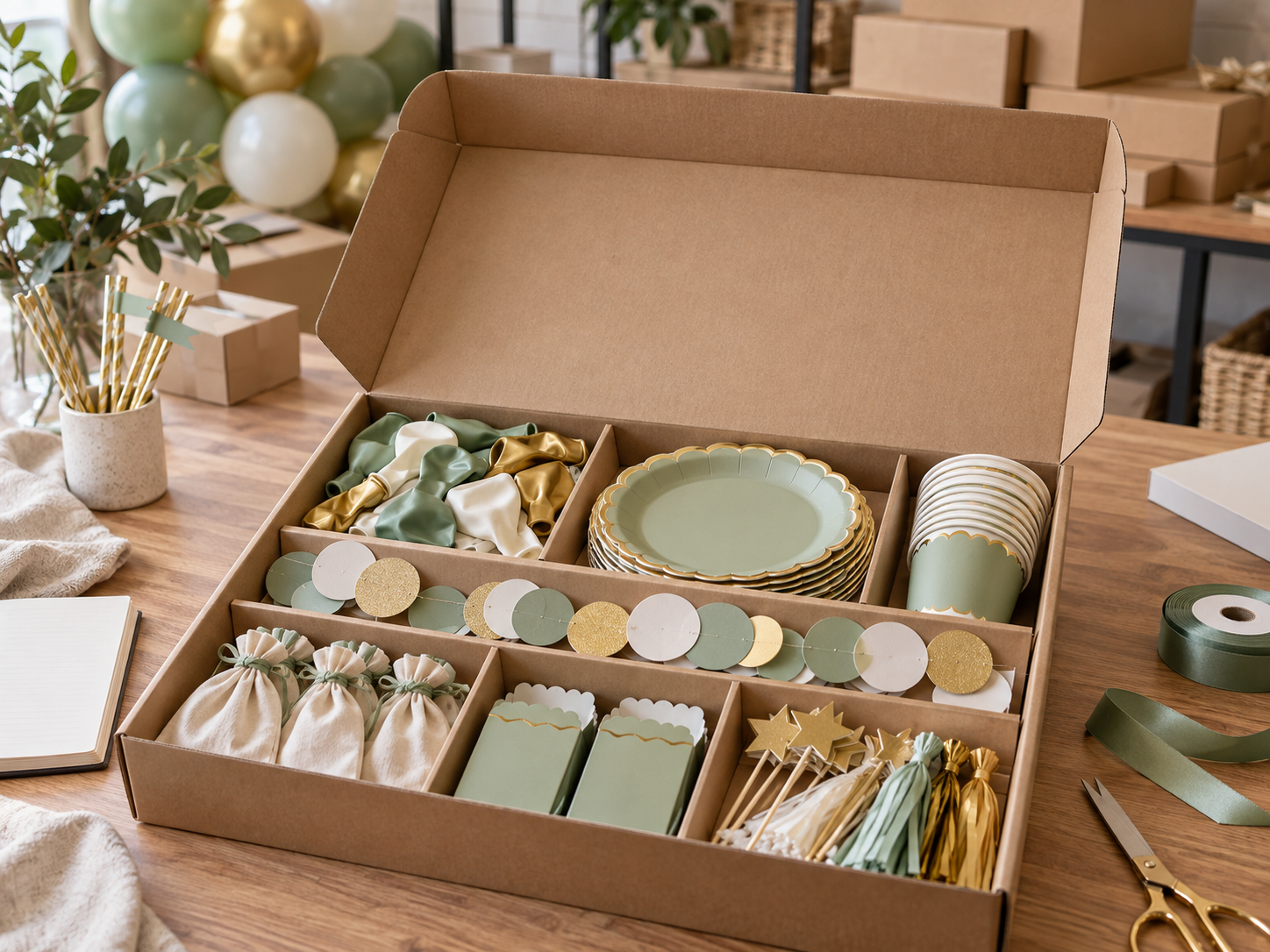
A party set is usually bought as one hero family plus three or four attach families, and the five families in this section are built to be combined that way. Balloons are the highest-frequency line and the one that defines the theme colour. Tableware covers plates, cups, napkins, cutlery and straws, sold in per-guest pack counts so a buyer can size a pack to a table: 8, 16 and 24 piece settings are the common ladder, with napkins at 16 or 20 per pack and cups at 8 or 12. Decoration covers banners, garlands and bunting, backdrops and photo props, centrepieces and table scatter. Headwear and accessories cover party hats, headbands, blowers, masks, badges and wristbands. Favours cover treat bags, favour boxes, fillers and thank-you tags. The commercial logic behind the ladder is reorder behaviour. Balloons and tableware are consumables: they are used up, they reorder season after season without a design change, and they carry the buyer's volume. Decoration, headwear and favours are the lines that lift average order value and make a display read as a themed set rather than a shelf of loose items. Kit the hero family with two or three attach lines and the set sells as a proposition; leave them apart and every line competes on its own.
Choosing a party range by occasion
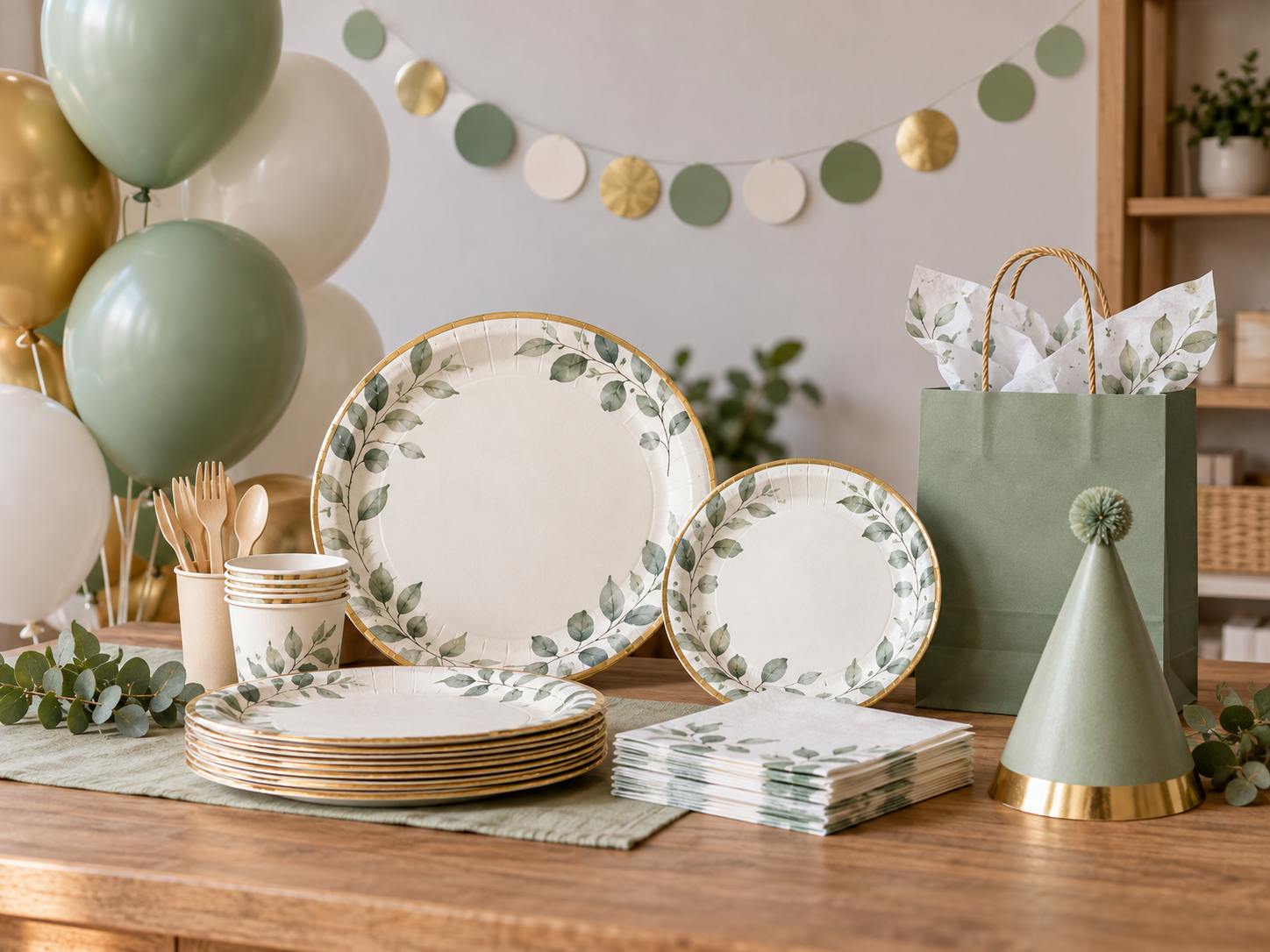
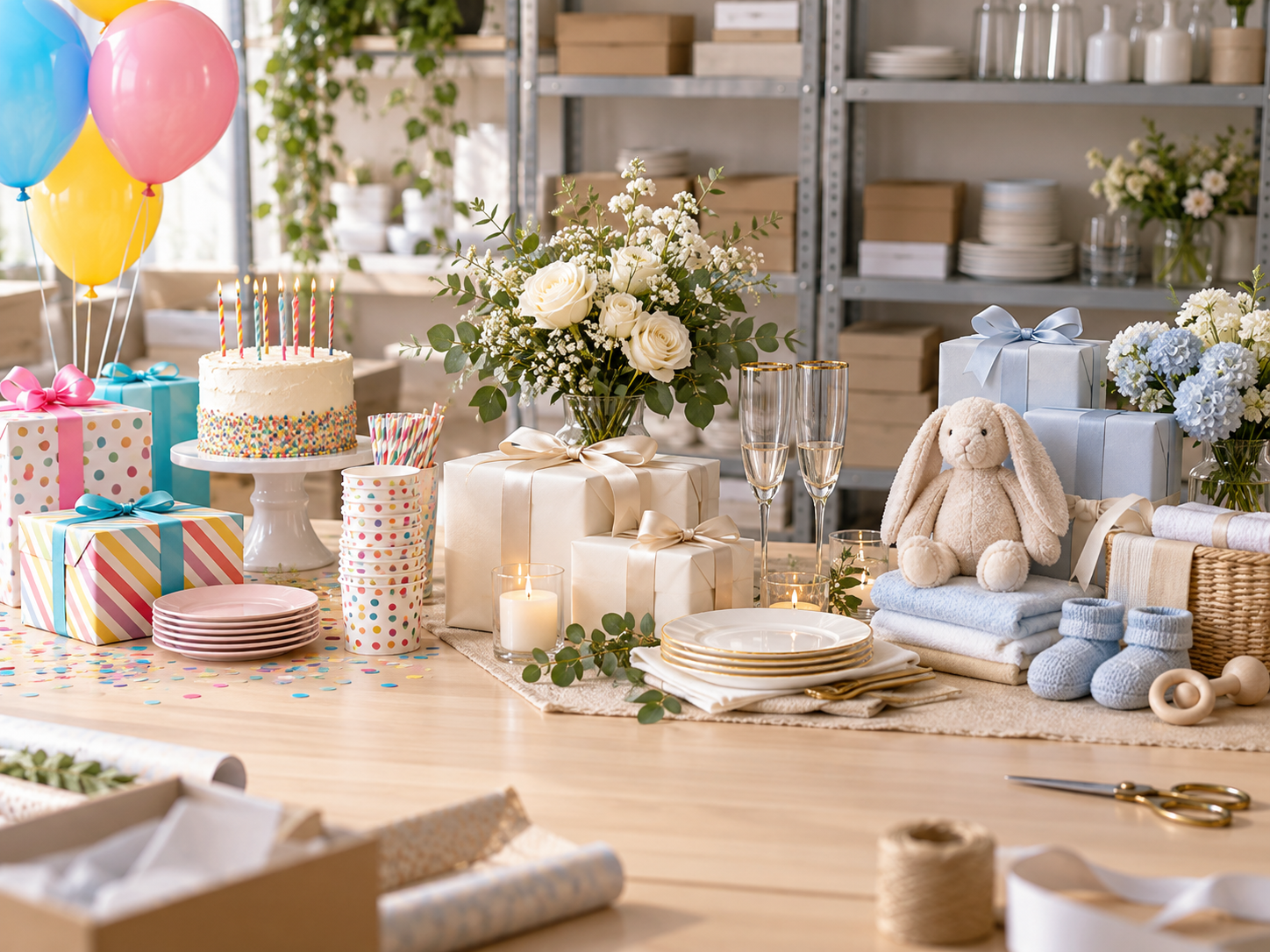
Occasion decides the pack count more than it decides the design. Birthday is the largest and most fragmented occasion: it runs all year, splits by age band from a first birthday to adult milestones, and carries the strongest demand for number and letter balloons, age-printed tableware and photo props. Baby shower and gender reveal are shorter, more colour-committed occasions where pastel and two-tone palettes dominate, with paper garlands, balloon arches, cake topper kits and favour boxes bought as one coordinated set. Wedding is a specification-led occasion rather than a volume one: colour matching, low-saturation palettes and large quantities of tableware and candle-adjacent decoration that must hold one exact tone across every family. Graduation is concentrated in a two to three month window and sells on dated, class-coded items, so year-printed copy has to be treated carefully. Corporate and school events are the least seasonal buyers and the most design-led: single-colour logo work, large guest counts and a short, predictable list of items that repeat every year. The practical rule for a buyer is to choose the occasion first, then the palette, then the pack count. Buyers who start from the pack count and then look for an occasion end up with a themed range that fits only one table.
Custom printing and private label on party supplies
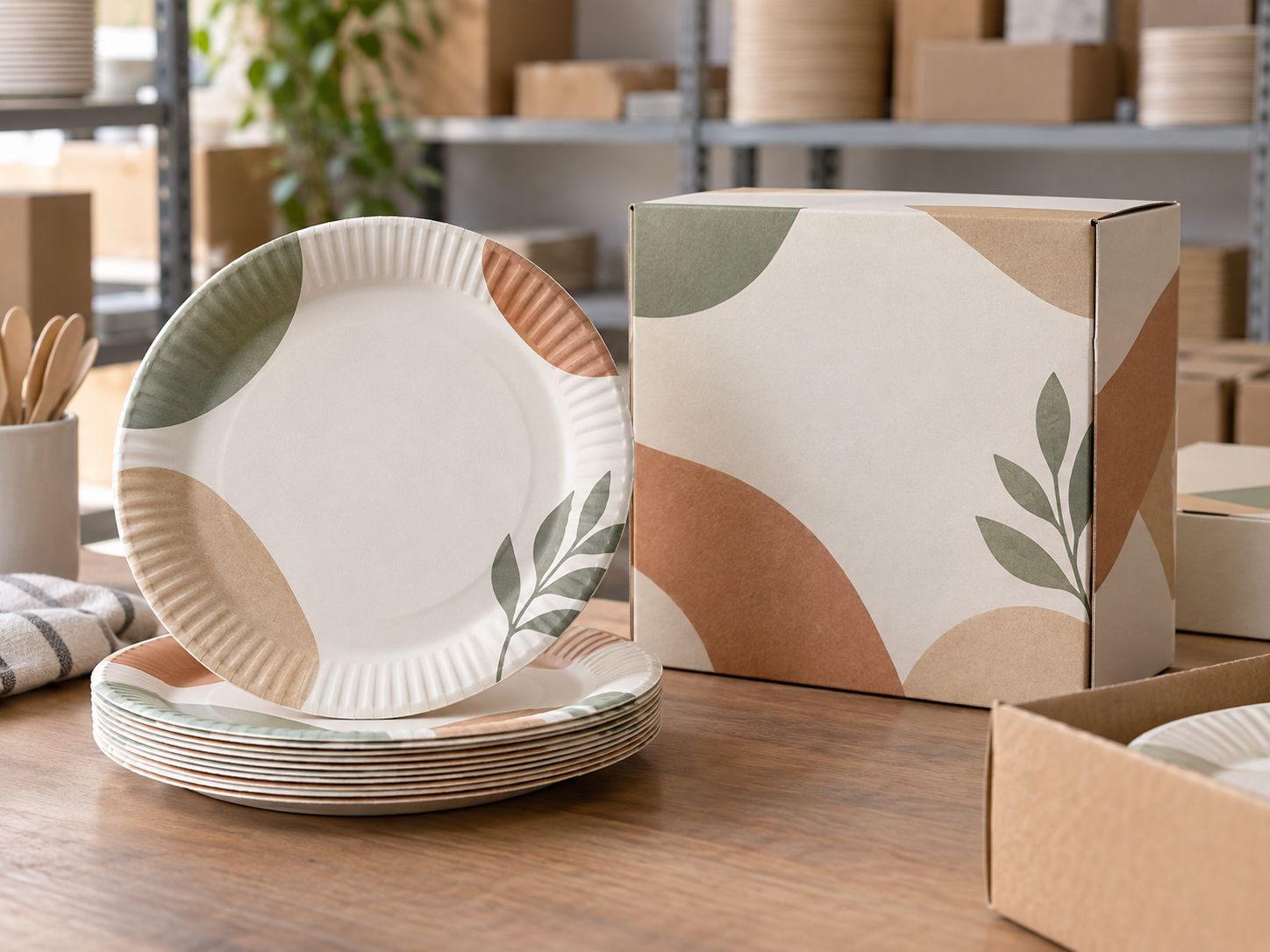
Custom work on party supplies is mostly a print and pack exercise, and the print method is dictated by the material rather than by the design. Latex balloons take pad or screen print in one or two colours, and the print area shrinks as the balloon inflates, so artwork must be prepared in the inflated state. Paper plates, cups and napkins are printed by flexographic or offset methods, with napkins commonly limited to a few colours because tissue bleeds ink. Plastic and paper tableware take print in a limited number of colours, while clear and heavily contoured items are usually decorated by sticker, wrap or sleeve rather than by direct print. Foil balloons are printed by digital or rotogravure methods and accept more colours than latex. Packaging is where most buyers get the real return: a printed poly bag, a header card, a colour box, a barcode and a hang tag turn loose pieces into a retail SKU and let the same base item sit on a pegboard instead of in a tub. Specify Pantone references rather than screen colours, and approve on the finished substrate, because paper, latex and film shift the same ink to three different results. Send artwork at enquiry stage and we will confirm which print route applies, the achievable colour count and the minimum that comes with it.
Packing and freight: why party supplies are a cube business
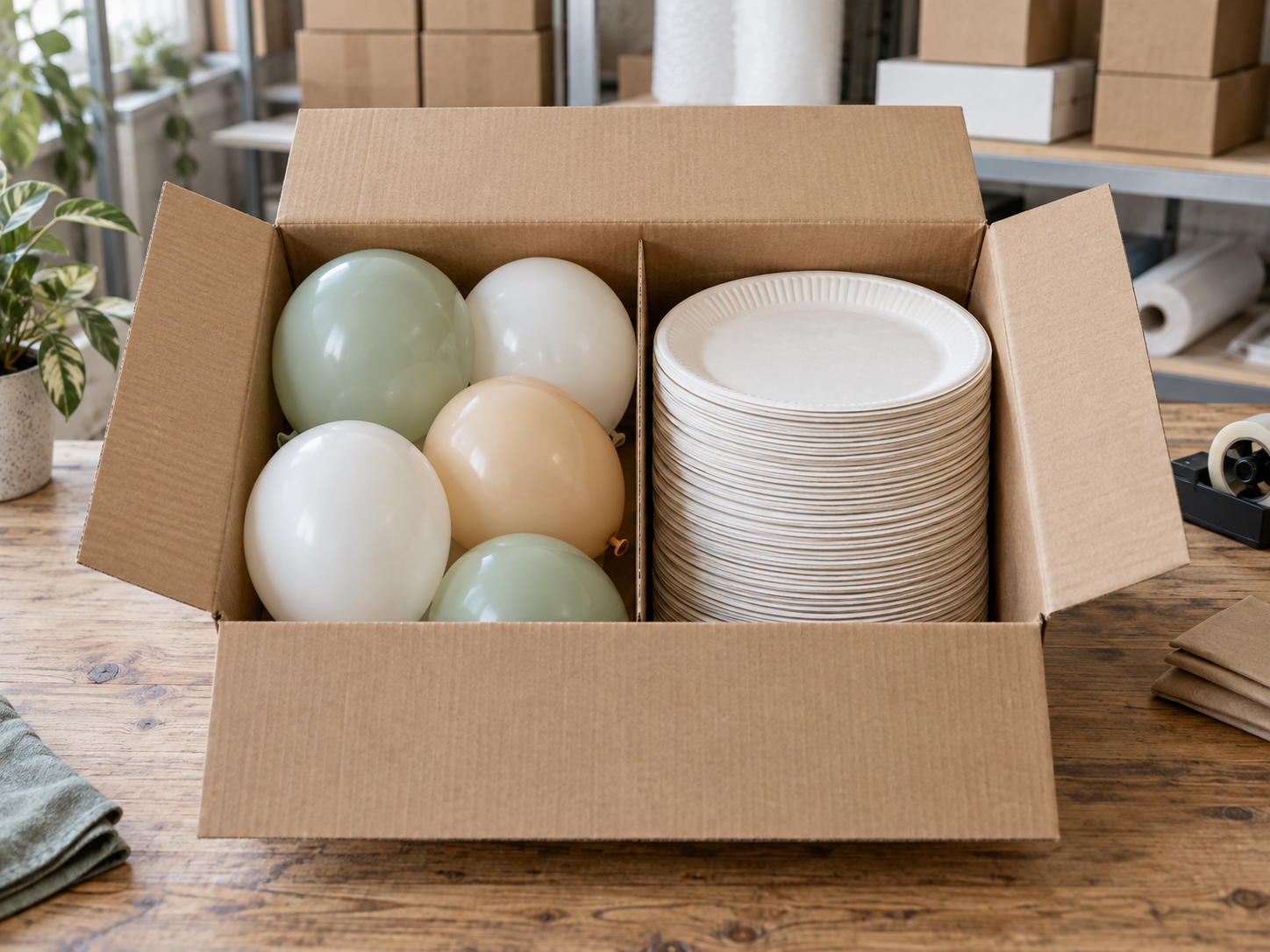
Party supplies are a cube business. Balloons, paper tableware, garlands and party hats are light and bulky, so a container fills on measurement long before it reaches weight capacity, and freight is normally quoted per cubic metre or as revenue ton, whichever is greater. The consequence is that the cheapest item per piece is often not the cheapest item to land. Pack formats decide the density. Paper cups nest and stack efficiently; plates nest well until the rim profile starts to trap air; napkins are dense when compressed and wasteful when bagged loosely. Balloons are the worst cube in the range and, for that reason, the best mixed-loading partner for heavier goods. Flat-packed garlands, folded banners and header-card packs improve pieces per cubic metre compared with tubs and rigid boxes, while boxed sets trade cube for shelf appeal, which is a legitimate choice as long as it is made deliberately. Mixed loading across the five families is standard and is the main lever on landed cost: add denser lines such as heavier plastic tableware, metal cutlery, glassware and favour-box board to bring the container to a sensible average density. Tell us the destination, the delivery window and whether goods move as loose cartons or on pallets, and we will propose a loading plan. Carton dimensions, gross weight and pallet configuration are confirmed on the order confirmation.
MOQ, sampling and lead times on party supplies
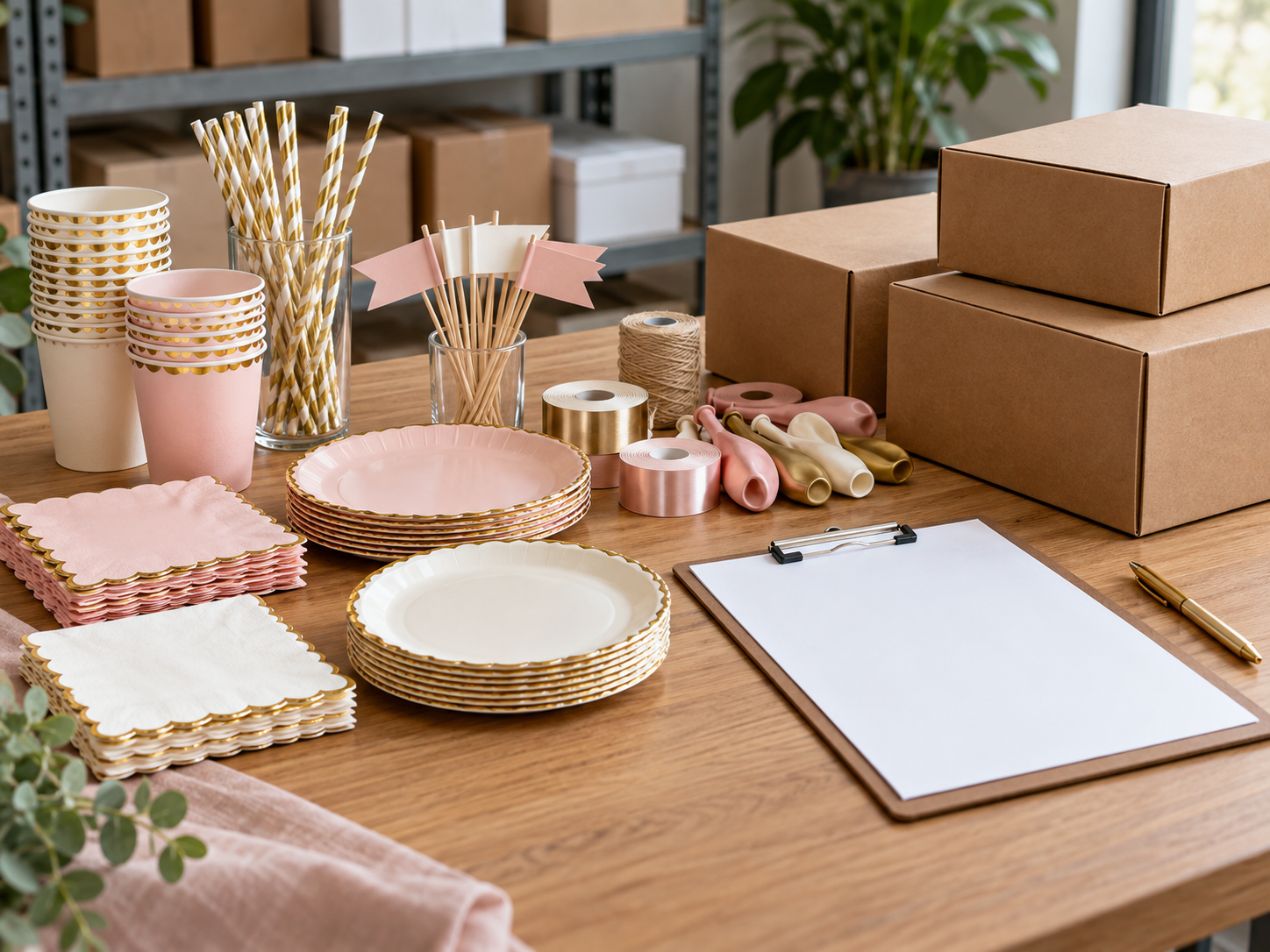
Minimum order is set per family rather than per set. Small accessories such as straws, badges, blowers and treat-bag fillers commonly start around 100 to 500 pieces per design. Tableware is usually quoted per pack format in full carton multiples and starts in the low thousands of packs. Balloons follow their own rules: stock latex in carton multiples of a few thousand pieces per size, foil from around 500 to 2,000 pieces per design, with number and letter foils lower still. Printed and private-label packs sit above stock minimums and are quoted against artwork. Boxed sets and kits commonly start around 100 to 500 sets. Sampling normally runs in two stages, a stock sample for specification and pack, then a pre-production sample once artwork and materials are fixed, and the pre-production sample is the one to sign off. Stock designs commonly ship in 15 to 25 days; printed or private-label goods run around 30 to 45 days from sample approval, with sampling adding roughly two to three weeks if it runs before approval. Sea transit is commonly 30 to 40 days plus around two weeks for port and inland movement. Everything above is an industry range, and the schedule for your order is confirmed with the order.
Compliance, testing and one container across five families
Compliance follows the item, not the shelf it sits on, and a mixed party order usually contains several different report families. Tableware that touches food, including plates, cups, cutlery, straws and cake boards, sits in the food-contact family with its own migration requirements. Balloons and any item a child may treat as a toy fall under toy rules, with EN 71 in the European Union and CPSIA with ASTM F963 in the United States, including the mandatory choking hazard warning on uninflated balloons. Soft plastic and printed film items fall under phthalate restrictions such as DEHP, DBP and BBP. Battery and LED items, candles and popping novelties each carry their own requirements in several markets. Items in this range can be produced to EN 71, CPSIA, FDA, LFGB and REACH requirements, and we will state the standard an item is intended to meet. We do not ask a buyer to accept a category description: ask us for the current test reports for the exact item, colour and print version you intend to buy. The point of buying this range as one programme is that balloons, tableware, decoration, headwear and favours load against one set of shipping documents and one shipping date, on FOB, CIF or DDP terms, so a full themed programme can be assembled without splitting the order across suppliers.